| |
| Tuesday, 08 December 2026 |
| Singe We Yule: A musical portrait of a medieval Christmas |
| Sarah Deere-Jones |
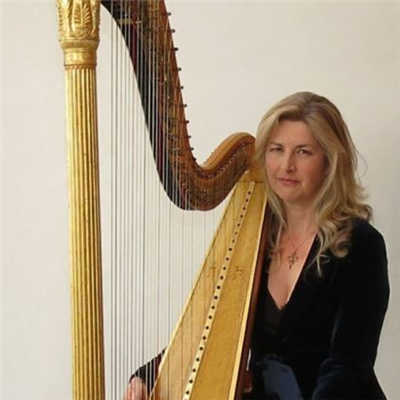 |
Using illustrations from illuminated manuscripts, readings from literature and contemporary accounts, and the haunting songs, carols and lively dance tunes of medieval England, Sarah brings alive the spirit of a Medieval Christmas - a time of joy and celebration for some, but hardship and suffering for others. With extracts from literature and manorial household accounts, she pieces together life in a medieval manor house at Yuletide. In addition to her reproduction medieval harps, she adds plucked psaltery, hurdy-gurdy, hammered dulcimer and gemshorn to the musical mix, performing carols, music and readings for an atmospheric and musical seasonal celebration. Sarah is a graduate and prize-winner from the Royal Academy of Music and in 2015 was elected an Associate. She performs, writes and lectures about the harp regularly in America, Australia, Europe and UK. All lectures include live music and songs on harps and other instruments depending on subject matter. |
|
| Tuesday, 19 January 2027 |
| Molly and the Captain: Gainsborough's daughters |
| Amina Wright |
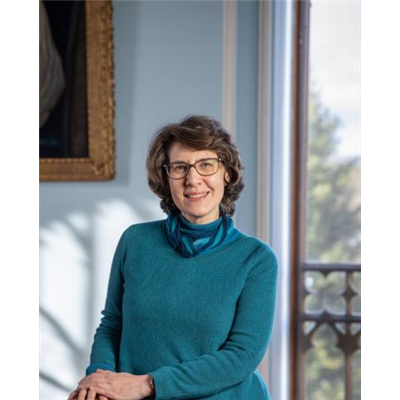 |
Mary Gainsborough (known to her parents as Molly) and her slightly younger sister Margaret (‘the Captain’) were sketched and painted more often than most girls of their time and class. The images of the talented sisters and their affectionate father’s letters give an exceptional chronicle of two young women growing up in mid-Georgian England. Through their father’s sensitive portraits of Mary, Margaret and their family (and a few of their pets), this lecture will follow their story from childhood in Suffolk, to the ‘tea-drinkings, dancings, husband-huntings’ of Bath and the difficulties of adult life, keeping up appearances in London. Amina Wright has three decades of experience as a curator of historic art collections and exhibitions. She has produced several major exhibitions on eighteenth-century British Art and Old Masters and published and lectured widely in these areas. As Senior Curator at the Holburne Museum in Bath she was a leading member of the team that delivered the museum’s highly successful 2011 redevelopment. She has recently completed a brand new one-of-a-kind museum, the Auckland Project’s Faith Museum in County Durham. Amina has also worked for English Heritage and the National Trust and has an MA in Christianity & the Arts from King’s College London. |
|
| Tuesday, 16 February 2027 |
| The Influence of the Utility Clothing Scheme on Post-War Fashion |
| Connie Gray |
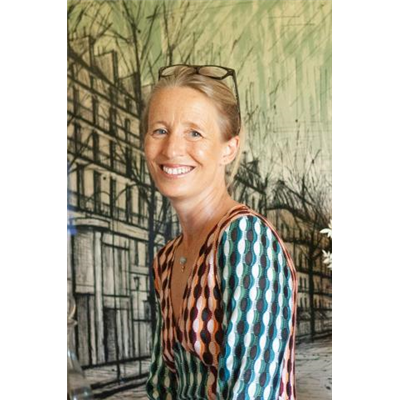 |
During World War II, fashion was no longer just about style, it was about survival. With fabric rationed and resources scarce, the British government introduced the Utility Clothing Scheme and the CC41 label, ensuring garments were practical, affordable, and long-lasting. Gone were the frills and excess of pre-war fashion; instead, clothing was designed with strict guidelines to maximise efficiency and minimise waste. With a background in fashion and broadcasting, Connie Gray is the leading authority on the history of 20th-century fashion illustration. She is the author of GPP: One of a Kind (Gray M.C.A 2025), the definitive illustrated biography of Gladys Perint Palmer, the most influential female fashion artist of the modern era. As a curator, educator, and lecturer, she advises internationally on exhibition curation and collections research, and presents at institutions including Central Saint Martins and the Courtauld Institute of Art. Her research and writing focus on the evolution of fashion illustration, the visual rhetoric of wartime style, and the artistic legacies of key fashion artists. She has collaborated with major museums and archives on aquisition, conservation, and exhibition projects, including Pioneers of Fashion (Lee Miller Archives), Crown to Couture (Kensington Palace, London), and 100 Years of Fashion Illustration (Society of Illustrators, New York). |
|
| Tuesday, 16 March 2027 |
| Mosaics in the Northern Adriatic: Power, Beauty and Education |
| Nirvana Romell |
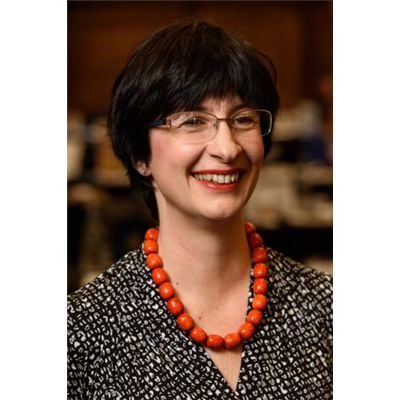 |
Ravenna is well known for its mesmerising mosaics. However, the Northern Adriatic coast has two more World Heritage Sites, and many smaller places showcasing incredible mosaics. For centuries, Aquileia hid the largest early Christian mosaic in Europe, used to explain the basics of the new religion to neophytes. In Poreč mosaics, a Byzantine Madonna triumphantly sits on the throne above the altar – perhaps for the first times in the history of Christianity. These mosaics have great aesthetic beauty and story-telling powers. They also bear witness to the centuries of people and culture mixing, and power struggles in the first Christian millennium. Nirvana holds an MEd in History of Art and MA in English Language & Literature, with 25 years of lecturing experience on three continents. Since arriving in the UK in 2003, she has been working as a freelance lecturer, public programmes consultant and tour director. She has regularly presented art history courses and lectures, as well as trained staff and volunteers, at the Manchester Art Gallery, the Walker Gallery in Liverpool, University of Manchester and other art and learning institutions. |
|
| Tuesday, 20 April 2027 |
| And So To Bed |
| Janusz |
 |
This lecture traces the significance and use of beds from the medieval period through to the 18th century both in terms of their association with the highest level of society as expressed through the great ‘State Beds’ and also the history of their construction, decoration and the, often costly, textiles associated with them. The significance of beds through the ages can be judged by the prominence given to them in wills and inventories - Shakespeare, in his will, left his wife Anne “my second best bed” - and modern day audiences may be surprised to learn that in times gone by, married or single, rich or poor, one never slept alone… Janusz is a freelance lecturer and researcher in English furniture history, and also an antique dealer. |
|
| Tuesday, 18 May 2027 |
| Aphrodite: The art of love |
| Dr Steve Kershaw |
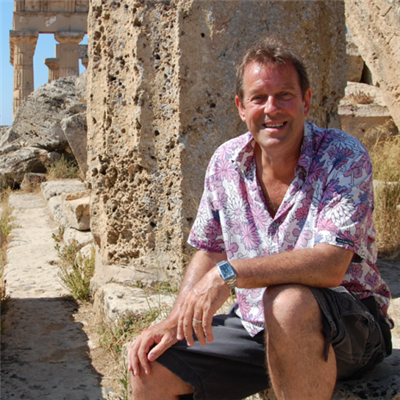 |
‘APHRODITE: THE ART OF LOVE’ is inspired by Dr Steve Kershaw’s involvement in the 2026-2027 blockbuster exhibition at The Ashmolean Museum in Oxford focused on Aphrodite, the goddess of love. His lecture will explore how ‘golden Aphrodite, who stirs up sweet passion in the gods and subdues the tribes of mortal men’ has inspired and shaped our ideas of love and beauty, examine the strange myths, exquisite poetry, and wonderful images that flourished in the Ancient Greek world, and trace how representations of this alluring-yet-dangerous goddess, ‘gold-crowned and beautiful’, have metamorphosed through to Botticelli’s The Birth of Venus and beyond. Dr Steve Kershaw (BA (Hons); PhD) has had a special interest in the world of the Ancient Greeks and Romans ever since being introduced to Homer’s Iliad by an inspirational teacher at his primary school. Having achieved a degree in Classics from Bristol University, Steve stayed on to write his PhD under the supervision of Prof. Richard Buxton, arguably the leading scholar on Greek myths in the world.
Since graduation Steve has taught Classics in a number of establishments, and now operates, in a semi-retired fashion, principally for Oxford University Department for Continuing Education, with loose affiliations with Merton, Keble, and Kellog Colleges. He authored and taught Oxford University’s on-line Greek Mythology, The Fall of Rome, and Minoans and Mycenaeans courses. Steve's many media appearances include acting as an expert contributor to the History Channel’s Barbarians Rising series, appearing in the Channel 5 TV documentary 'Atlantis' fronted by Dan Snow about destroyed ancient cities, and guesting on BBC Radio 4's You're Dead to Me hosted by Greg Jenner. He has also written a number of books. Steve is also an internationally renowned jazz double bass player, who has performed at jazz festivals from Cuba to Arkhangelsk. An Honors Graduate of the Musicians Institute in Los Angeles, he has appeared in films and on TV, and has an extensive catalogue of recordings to his name, as well as a couple of books on playing the bass. He lives in the Oxfordshire village of Deddington with his artist wife Lal Jones, an English Springer Spaniel called Hero, and a rescue Cockapoo called Tan. |
|
| Tuesday, 15 June 2027 |
| Gilding the Cherry Blossom: How Western jewellers discovered Japan |
| Rachel Church |
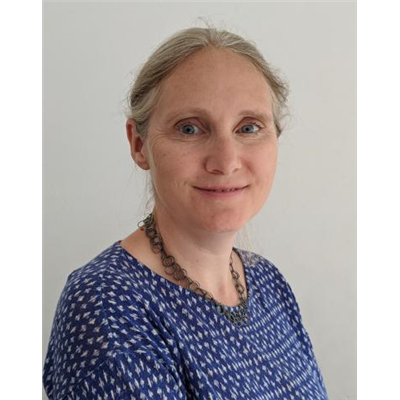 |
Japan re-opened to the West in 1868 when the Meiji restoration brought the end of the Shogun era. Japanese lacquers, wood-block prints, ceramics and silks caused a sensation in the West and inspired fantastic jewellery from Cartier, Tiffany, Falize, Boucheron, Fouquet, Gaillard, Vever, Lalique and Fabergé. Chrysanthemums, cherry blossom, kimonos and samurais decorated jewels inspired by the colours and materials of Japanese art. The art of Japan became the foundation of the Art Nouveau movement. Rachel Church developed a love of history as a student in Cambridge. After a Masters in Museum Studies, she went on to work as a curator at the Victoria and Albert Museum. She became an expert in jewellery by cataloguing and researching the collection, and as part of the team which redisplayed the William and Judith Bollinger Jewellery Gallery in 2011. Her books Rings (V&A / Thames and Hudson, 2011 and 2017) and Brooches and Badges (V&A / Thames and Hudson, 2019) look at the human stories behind some of our most beautiful jewels. She lectures on V&A courses, for the Goldsmiths company and many arts societies. Her website, www.thelifeofjewels.com, explores stories behind jewellery and its history. She writes regularly for specialist jewellery publications and for the Times Luxx magazine. |
|
| Tuesday, 20 July 2027 |
| Iconoclasm and the Art of Destruction |
| Aliki Braine |
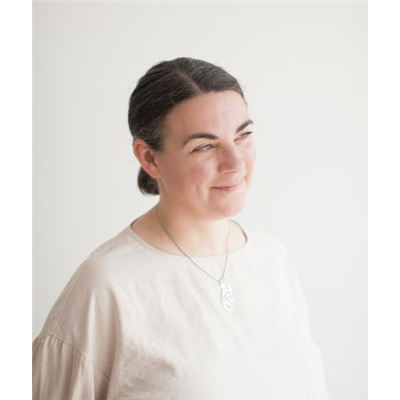 |
The most significant proof of the power of art is the fact that some people feel the need to destroy it. Attacks and acts of destruction have gone on for as long as art has existed, from the iconoclastic riots of the Protestant Reformation to climate protesters’ defilement of historical paintings in national museums. This lecture will explore artworks that have survived despite attacks, the appeal of ruins and the practice of using destructive strategies to create art. Aliki studied at The Ruskin School of Fine Art, Oxford, The Slade School and The Courtauld Institute where she was awarded a distinction for her masters in 17th century painting. She has been working for The National Gallery for 25 years and teaches for Christie’s Education, The Wallace Collection and numerous private clients. Aliki is also a practising artist who regularly exhibits her photographic work internationally and has taught at Camberwell College of Art. |
|
| Tuesday, 19 October 2027 |
| Paul Klee: The German Expressionist who documented his disease in his drawings |
| Dr Alan Silman |
 |
This is a unique and very moving story for any artist! In this lecture Alan reviews the life and works of Paul Klee and the impact of his unfortunate mysterious illness. The talk will show Klee as a poet, a writer, an accomplished musician and a teacher as well as being one of the most prolific artists of the 20th century. His work covered several 'isms' of post-First World War German art. He also had a wicked sense of humour in his caricatures. Shortly after escaping from Nazi Germany, as one of the so-called 'degenerate artists', Klee developed the very rare auto-immune disorder, scleroderma. This is a disease that has been the subject of much of my research career. Professor Silman has had a career studying the long-term effects of disabling disorders. The series of lectures offered to the Society is based on his research on a number of famous people in the arts, and of the impact of their medical problems on their achievements. He has focused recently on engaging with lay audiences across a range of platforms aiming to inform, educate and at the same time to engage enotionally with the challenges and sorrows of may of his target subjects Currently Alan Silman is a Professor of Medicine at Oxford University and Senior Research Fellow at Green Templeton College Oxford. He is an epidemiologist with a particular interest in diseases of bones, muscles and joints. He has authored over 700 research publications and a number of textbooks. In recent years his focus has been on explaining complexities of science to the informed lay public, best exemplified by his blog during the Covid-19 pandemic which reached 100 countries at its peak. In his spare time, he is a lover of theatre and an amateur drama enthusiast, and he directed his first play in 2024! |
|
| Tuesday, 16 November 2027 |
| Hidden in Plain Sight: The misunderstood masterpiece by Venetian carver Francesco Pianta |
| Caroline Bendix |
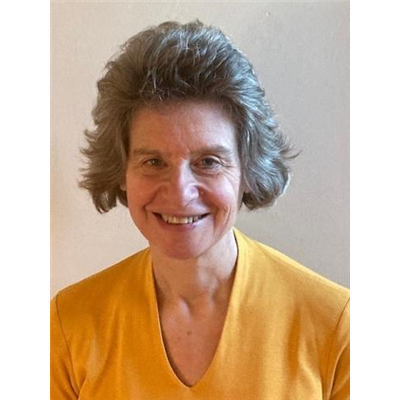 |
Containing ground-breaking research, this lecture explores the astounding carving/sculpture of a bookcase filled with books. The carving is part of a suite of wooden sculptures in the Scuola Grande di San Rocco in Venice, others of which also have books depicted. Understanding the subject matter reveals the brilliance of the carver, Francesco Pianta, his ability to observe and carve what was in front of him in minute detail. One C17 writer stated “it is a bookcase, so beautifully carved that many wish to touch it to see whether the books are real or fake,” which could be why so many people walk past it oblivious of its importance. Caroline Bendix is a library conservator, accredited through the Institute of Conservation, who has worked on over 500 collections in the UK and abroad, including St Catherine’s Monastery, Sinai, advising on all aspects of books’ care in situ. She has written three of the British Library’s guides on preservation and in 2019 was awarded the Plowden Medal for her “outstanding work in developing in-situ library conservation”. Since 1992 she has been the National Trust’s Adviser on Libraries Conservation, the adviser and trainer for The Arts Society’s Heritage Volunteers projects and is on the Archbishop of Canterbury’s advisory panel for Lambeth Palace Library. |
|
| Tuesday, 14 December 2027 |
| Masterpiece on your Mantelpiece: Images on Christmas cards |
| Richard Kay |
 |
A great deal of thought goes into the images selected for Christmas cards but how many cards embody our own interpretation of the season? In a selection of subjects drawn from the cards themselves, this overview of 600 years of representations of Christmas covers a wide range of subjects, from Medieval manuscripts to Contemporary themes. Richard Kay has been an auction house picture specialist for 40 years, having previously worked at Sothebys and Phillips, and now with Wiltshire auctioneers Woolley & Wallis. He is a History of Art graduate with a keen interest in all periods of art; the emphasis in his lectures is on how a greater understanding of artists' themes and ideas can enlighten us about social habits and practices across the centuries. |
|